Wednesday, August 30, 2006

James Cagney


For years, this man was just a bad impersonation to me. The only thing I associated the name James Cagney with were hammy comedians going "You dirty rat. You killed my brother." all the time. I knew he was an actor and a legend and all that but his name never really did much for me.
But, then I purchased a Warner Bros. gangsters DVD box set, many of which star Cagney. Now I know why this man became a legend and pretty much set the standard for gangster films ever since. Wow! That man could act. His level of intensity that he brought to each one of his performances is nothing short of breath-taking. He practically leaps off the screen and slugs you one right in the kisser, he's so dynamic. And yet, he quite often manages to pull off another neat trick at the same time. You're always rooting for him. Even when he plays the most despicable, the most sleazy, or even the most downright evil character ever, you still want him to win in the end and even feel a bit sad when his gangster character is gunned down after years of corruption.

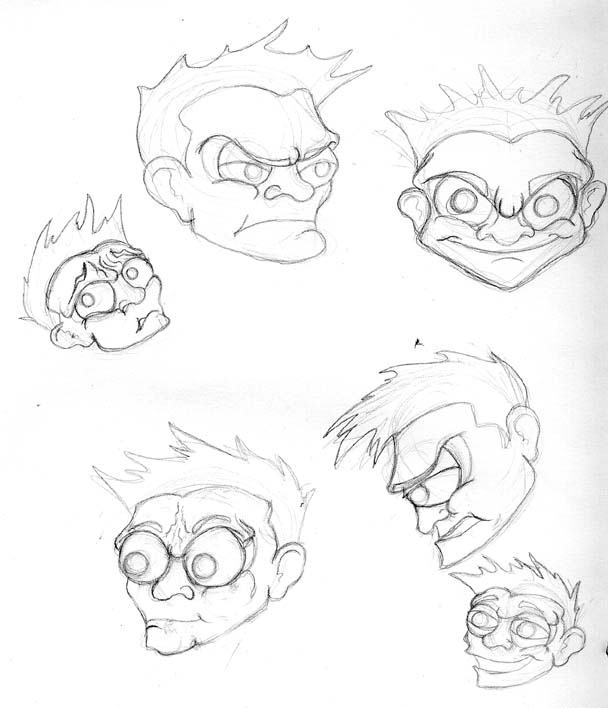
Live action actors and definitely animators can learn alot from studying this man and his work. If you can capture even 1/5th of his intensity, you're doing great. My first attempt at drawing him and his various emotions is below. Some of the pictures are better than others of course, but I think I'm on my way to learning what makes him tick and how to apply that to my other work.


Tell me what you think either about these drawings or about Cagney himself.

Sunday, August 20, 2006

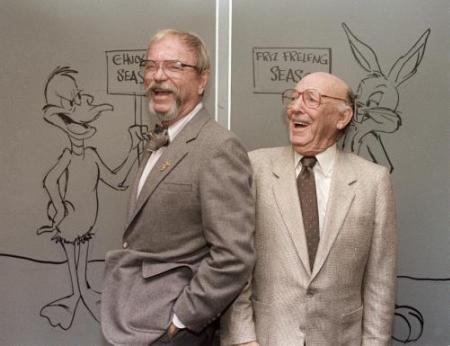
The Friz Freleng Diamond Anniversary Blogathon


Yes, August 21 is the birthday of one Isadore "Friz" Freleng. However, 2006 is only one of the years that Friz could have turned 100. There's evidence that supports him being born in 1904 or 1905 as well. He did have a younger brother named Allen who was born in 1907. That gives us a bit of a clue.


Oh well, exactly how old the man would have been had he been granted the priviledge of never dying is irrelevent compared to the contributions he made to the animation industry. I'll name a bunch right now.


Like most of animation's greats, Friz started off working for Walt Disney around the mid 1920's. According to Merritt & Kaufman’s “Walt in Wonderland” Freleng’s first animation for Disney was on Alice’s Knaughty Knight (Jan 1927). On his 3rd picture (Alice’s Picnic) he had a scene of a mother cat washing her kittens in a tub. To make the scene more interesting he had one of the kittens crawl out of the tub and drop to the ground, and the mother cat grab it and put it back in. When Walt saw the scene he called it to everyone’s attention. “That little kitten didn’t just jump out of the water, he climbed up and hung there and dropped down like a little kid would do,” he said, “Friz did it this way and made him act like a little kid. That’s what I want to see in the pictures. I want the characters to be somebody. I don’t want them just to be a drawing.” So you see, it was Friz who took cartoons to a whole new level by adding little subtle movements in order to give the figures more personality. How many great animated masterpieces wouldn't have been possible without that?


When Hugh Harman and Rudolf Ising had "professional differences" with Walt and walked out on him, Friz followed both of them along with many others. They're first task as independant artists was to create a pilot film featuring a character they hoped would become a star, namely Bosko. Friz provided much of the animation in this pilot. When the Bosko film landed them a job making cartoons for Warner Bros. under Leon Schlesiner, Friz was the head animator on all of them. Friz constantly asked Harmon & Ising if he could be promoted to the director's chair but for some reason they never complied. Even when almost everyone walked out on Leon over budget disputes and set up shop a MGM, Friz was not made a director.


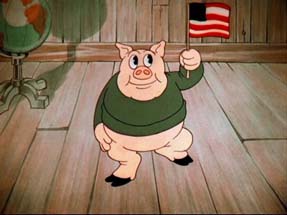
Fed up with waiting, Friz went back to Leon Schlesinger. A man named Earl Duvall had just completed two films as a last ditch effort to prove his worth at the studio. Leon was less than impressed with what he saw. Friz took those films and re-editted them and fixed or improved and timing problems they had. Leon was so impressed by what Friz had done that Earl was immediately fired and Friz was made the head director of the entire studio. A year later, he would create Porky Pig their first major star. (Yes, some people believe that Bob Clampett created Porky by drawing that picture of Porky and Beans for the character design contest the studio had. But, that arguement comes around again because Clampett got the model of the Porky he drew from the model sheet Friz made for Porky's first cartoon I Haven't Got a Hat).


Also, if it wasn't for Friz Freleng, Chuck Jones wouldn't have realized his potential. Chuck Jones' first years as a director at Warner Bros. were a bit shaky to say the least. His penchant to try to immitate the Disney style really put a damper on the irreverent Looney Tuney-ness they had come to establish. For this reason, Leon Schlesinger was ready to demote Jones back down to animator. But, Friz Freleng stepped forward and said, "Come on, Leon, give the kid a chance. He'll make you proud someday." So, Jones stayed a director and did indeed made the entire studio proud to have him. Jones accomplishments are to be the subject of an entirely different post so I won't pad an already lengthy post with them.


Besides Porky, Friz would create two other major characters at the studio: Sylvester and Yosemite Sam. When Bob Clampett exitted the studio (for reasons that are clouded in mystery to this day) Friz asked if he could pair Bob's little Tweety bird with his cat Sylvester. The result was not only a brilliant comedic team but also got Looney Tunes it's first Oscar for the cartoon Tweetie Pie (c. 1947). Friz won another Oscar with Sylvester & Tweety for Birds Anonymous (c. 1957) and even won with Yosemite Sam for Knighty Knight Bugs (c. 1958).


But Friz would also win an Oscar with someone else's character. Bob McKimson created Speedy Gonzales in a catoon called Cat Tails for Two (c. 1953). Speedy somewhat acted like his familiar self but he looked a little different. All he wore was a red T-shirt and had a gold tooth. For some reason, McKimson planned to walk away from that character. So, Friz picked him up and had his layout man Hawley Pratt redesign him into the sombrero clad hero we know him as today. That cartoon, Speedy Gonzales (c. 1955) went on to win an Oscar. McKimson would come back to Speedy and make the Oscar nominated Tobasco Road (c. 1957). After that, Friz and McKimson would each assume the duties of making Speedy cartoons.


The studio closed down in 1962. However, Friz was not caught with his guard down. He had been involved in a partnership with David DePatie for a while at that point. So, when the hammer came down, the two men started their own studio. Since they were using the very animation equipment and studios that Warner Bros. had just abandoned, Jack Warner himself that they release cartoons through Warner Bros. as well. So, the DePatie Freleng studio went to work on a new series of Roadrunner cartoons (sadly without Chuck Jones directing them) as well as Daffy & Speedy cartoons. The budgets on those were consierably lower because the studio was also working on an original character of their's namely the Pink Panther. That character did much better. He won an Oscar in 1964 for The Pink Phink even.


Despite all these ccomplishments, John K has taken many oppurtunities to belittle the man on his blog as well as in interviews. Well, since today is Friz's day, I'll let him deal with John.


No more anonymous comments


That's right, folks, I had to turn off the anonymous comments option. Recently, a nest of internet trolls got into my blog and laid their eggs which caused a huge infestation. Since DDT or a roach motel would have been useless for a blog, I therefore had to use what would work. For now, turning off the anonymous comments should do just fine. If things get worse, I may have to use the other options available to me.

But, I think this preventative measure should suffice. Like the commercial says: "Turning off the anonymous comments kills trolls dead." >:P

Friday, August 18, 2006

Jeff Mullet


Here's another TV show idea I have. It's about this guy named Jeff Mullet. Basically, he thinks he can do everything when in actual fact he can do nothing. He'll walk around this great big world of ours. Once an episode, he'll see a job that needs doing and instantly think that he's the ideal man for that job. He'll then fake his way into the area, assume the duties, screw them up completely, and then get run out of town or wherever it all takes place.

By the way, everyone who went to animation school with me knows EXACTLY who this guy is patterned after. ;)

Wednesday, August 09, 2006

And that's the way it is August 9, 2006.


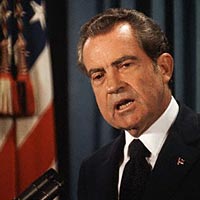
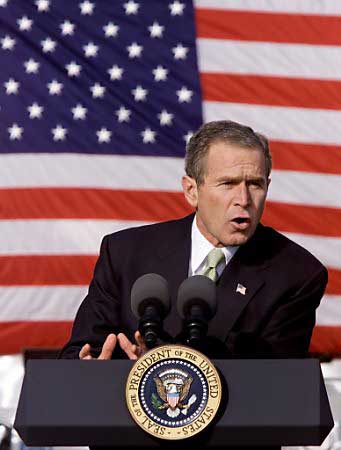
August 9, 2006 is quite a significant day. "Why?" you may ask. Well, it is the 32nd anniversary of the day one Richard Milhouse Nixon 'cut and ran' from his own presidential post as a result of his low approval rating. "But how is that significant for today?" you're probably asking. Well, let's compare Mr. Nixon with Mr. Coo-Coo Bananas in charge right now and see for ourselves.

A: Nixon was re-elected for a second term amid many protests and had low approval ratings in the middle of that second term.
George W. Bush was also re-elected (well, actually just elected for the first time) for a second term amid huge protests and has very low approval ratings within the middle of this his second term.

B: Nixon kept America in an unjust war inwhich atrocious war crimes were carried out and that divided the country down the middle all just to support some hidden political agenda.
George W. Bush STARTED an unjust war inwhich atrocious war crimes are carried out and that has divided the country down the middle once again all just to support a hidden political agenda.

C: Many damning scandals were uncovered within Nixon's administration such as the Watergate break-in, the recorded tapes of Nixon making anti-semetic remarks, and his using tax payers money to "silence" those who opposed him like Jane Fonda or John Lennon all lead to a low approval rating.
Many of George Bush's scandals are in plain view such as the Abu Grahb prison atrocities, the torture done at the Guantanamo Bay prison, a huge enough anti-Latino stance that the building of a wall along the U.S./Mexican border is deemed necessary for some reason (and don't say "to stop illegal immigration" because we all know that's bullshit), the start of a massive war in Iraq (despite no evidence of any destructive weapons) which has escalated into a situation in the Middle East many journalists are dubbing as World War III, etc......... etc........... all have lead to the president's low approval rating.

And yet, there is a fundamental difference between these two men that should disturb everyone. By August 9th, 1974 of the second term Nixon was gone. However, here it is today August 9th, 2006 of Bush's second term and HE'S STILL IN OFFICE!!!!! Surely if there was the equivalent of Woodward, Bernstein, or Deepthroat around today, George Bush would be resigning in disgrace right now. But, nope, that hasn't happened. In fact, he'll probably be still around August 10th, 11th, 12th, 13th, even as far as January 20, 2009. Who knows what crazy or annoying or downright criminal scandals will occur between now and then because Dubya is as hard to get rid of as the worst form of cancer.

How is he managing to stay in office???


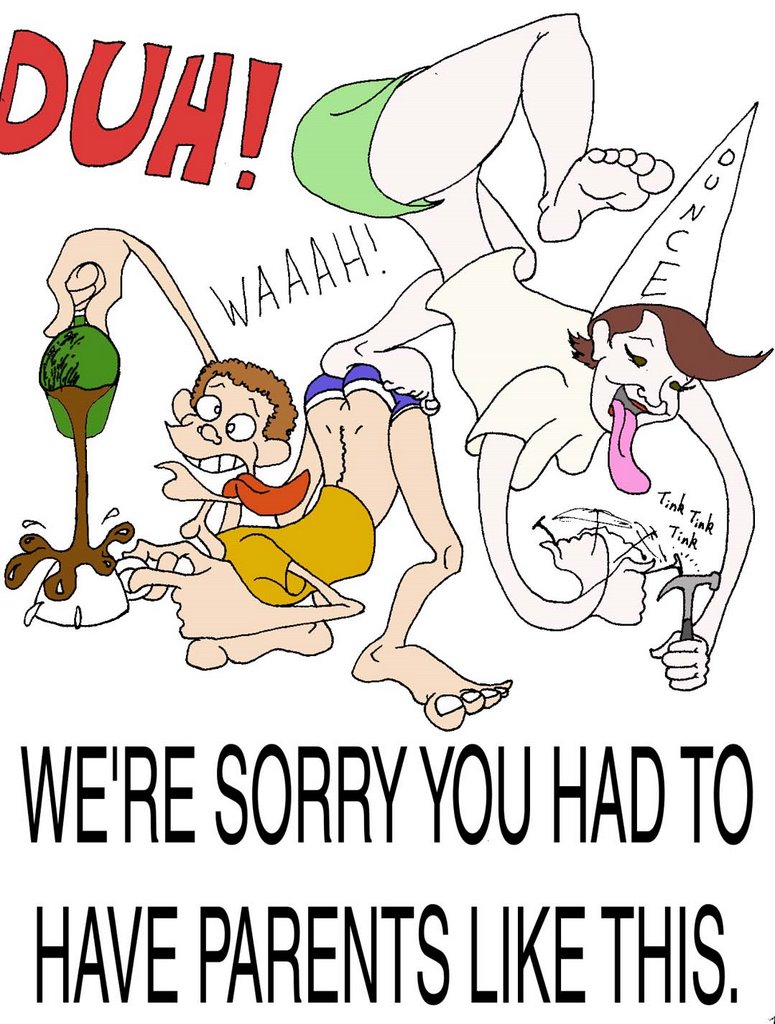
Oh. I guess that answers that.

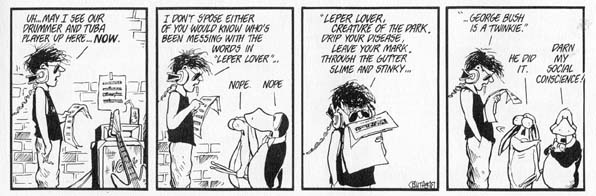
I'd like to end this post with a favourite comic strip of mine. Sure it was made a whole 20 years ago and the George Bush it mentions is George Bush senior who was only Vice President at the time. But, I think this particular strip applies as much to the present day Bush as it did to the old Bush. Enjoy!


Have fun in the coming apocolypse everyone.

Tuesday, August 08, 2006

Paula-Jean's birthday


Remember this sister of mine? Well, I have another sister. Her name is Paula-Jean and she turns 28 today. Her double name is a combination of both our grandma's names, Pauline on the maternal side and Jeanne on the paternal side.
Her basic personality, she's cwaaaaaaaaaaaaaazy. But that does help when working with kids. Thusly, she manages many youth activities at the YMCA in Medicine Hat, Alberta and from what I've heard she's doing a bang-up job of it too.

If you know Paula-Jean, leave her a happy birthday comment on this blog or even just say "hi". But, if you don't know Paula-Jean, don't say anything because you suck. >:P (No, I'm just kidding. You can leave a comment if you don't know her as well, but still realize that you do indeed suck. >:P >:P )

Sunday, August 06, 2006

I've got a new second cousin


Her name is Abigail. She was born June 4 of this year. Above is the card I plan to give her along with her present. I'm hoping that she and her parents will like it.

Tuesday, August 01, 2006

New possibly controversial monkey


As the text under the picture indicates (I must emphasize this in as big and bold a text as I can), THIS IS NOT AN IMAGE OF THE ISLAM PROPHET MUHAMMED!!! What it is though is a representation of the zany Muslim zealots who go nuts whenever they see an image of Muhammed or even if they think they see his image. Worse yet is that they try and justify their violence by stating how these images defile Him so much. There are some recent murmurs like this over an episode of South Park from Season 5 (an episode I happily own on DVD by the way).

Nation of Islam, I'd like to be frank with you for a bit. I'll start by telling you a brief bit of history of the Catholic Church. For years and years, all the masses and other ceremonies were done entirely in Latin. This was a practice continued well into the 20th century. However, this caused many people to decry this church as out-dated and irrelevent to today. So, in 1960, something called Vatican II was organized. This brought many religious leaders together in order to hold a series of meetings so that they could find ways to modernize the church while still keeping with its traditional values. One of the things thankfully thrown out was the Latin. This and a few other changes brought many parishoners back to the church and Catholicism is still quite strong today, minus the priest/boy molestation of course. No, the church is indeed not perfect, but noone has any malatav cocktails to throw at anybody.

Islam, you need a Vatican II equivalent now more than ever. Or maybe you needed one back before Osama bin Laden and George W. Bush started this whole mess.

In any case, the monkey above will be joining these monkeys along with this monkey and these wittle monkeys too. Watch for all of them in a new adventure coming...................... I'm not sure when.

Thursday, July 27, 2006

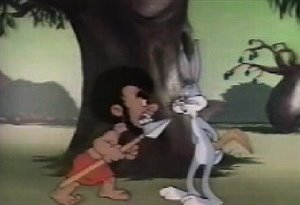
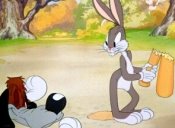
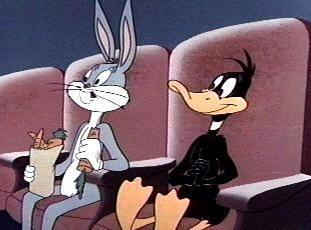
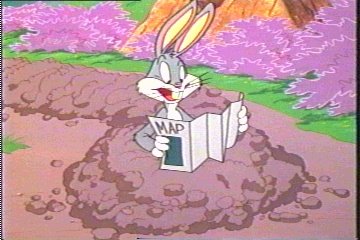
Bugs Bunny


Today is the birthday of one of the greatest cartoon characters ever made, namely Bugs Bunny. Today he is 66 years young. (Of course, Warner Bros. doesn't want the Looney Tunes' ages to be known. But, you know what? These are the same people that conceived Baby Looney Tunes, Loonatics Unleashed, caused much unrepairable damage to the projects Space Jam and Looney Tunes: Back in Action (as well as other animated features on their roster) and they most recently brought us the Youtube fiasco. In light of all this: SCREW WHAT THEY WANT!!!) But enough about that, let's get back to Bugs.

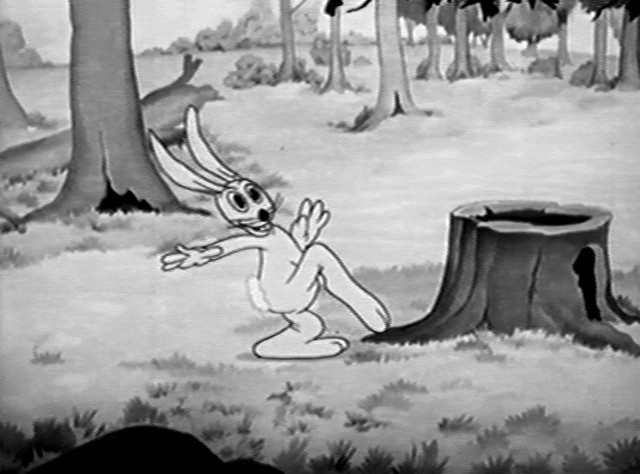
I won't get into his creation story because it is too long and too involved with many many names to remember. Not only that, but Bugs essentially has two creation dates. One is April 30, 1938 which is when Ben 'Bugs' Hardaway started the basic idea in the cartoon

Porky's Hare Hunt and the other is July 27, 1940 when Tex Avery refined the idea of Bugs to near perfection in A Wild Hare.

(Since I'm posting this on July 27, guess which of those dates I believe in).

The point of this blogpost is to elucidate about who Bugs is and how he manages to survive. I'll just start out by saying that Bugs' method of survival is the best way to go about it and is infinitely better than any of the comic book heroes made today or since.

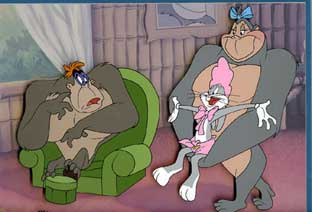
For one thing, Bugs can automatically sum up his opponent no matter what the situation. Yes, I know The Terminator has this ability as well but he needs a computer program planted in his robot brain for it to work. Bugs has that ability naturally. One good example where this ability is apparent is the cartoon Hurdy Gurdy Hare (by Robert McKimson c. 1950). When Bugs is first approached by a big gorilla, he looks at him and says "Hmmmm. Obviously a barbell boy." See, right away Bugs knows his enemy and more importantly knows several schemes that could take him down. Most other super heroes have to use the trial and error method, in that they don't always know their enemy's weakness(es) right away. Much battling and pondering is required to even reach that plateau. But Bugs manages to skip that phase and thus concentrate on the imminent victory against a bald hunter, an angry redheaded outlaw, a martian, a jealous duck, or any other miscellaneous villain thrown at him.

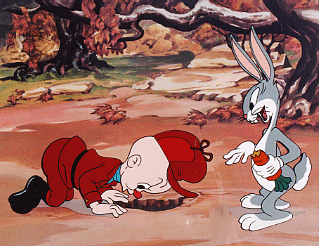
Which leads me to another aspect of Bugs: he's playful. Whether he's just out to heckle like in The Wacky Wabbit (by Bob Clampett c. 1942) or is out for vengeance like in Homeless Hare (by Chuck Jones c. 1950) Bugs always takes time to play with his opponent. And of course, the more playful Bugs is the more frustrated his opponent is. This in expotentially much more fun to watch than some bland human in tights taking things seriously all the time.
I'll even add something to this sentiment. Bugs is not only playful, but he's clever as he plays. He possesses more than enough imagination to defeat his enemies with a wide variety of tricks. In Hillbilly Hare (by Robert McKimson c. 1950), he not only carries out some clever gags, he calls a square dance as he does it. In The Unruly Hare (by Frank Tashlin c. 1945), he blocks Elmer Fudd's surveying telescope with girly pictures in Esquire magazine. In Rabbit Hood (by Chuck Jones c. 1949), Bugs actually manages to talk the Sherrif of Nottingham into a house right in the middle of one of the king's flower gardens by pretending to be a high pressure real estate salesman. Who can top such cleverness?

Yet another thing that keeps Bugs alive is his incredible adaptability skills. He can not only take on all opponents while on his own turf (the forest) he can do so on the other guy's turf as well. And when he adapts, he goes all out and definitely makes himself one with the environment. For instance, when he's involved in a Wagnerian opera with Elmer in What's Opera, Doc? (by Chuck Jones c. 1957) he plays it to the hilt, even faking his death at the end just to give it a tragic ending. When he doesn't want to get thrown off a Mississippi river boat as a stowaway in Mississippi Hare (by Chuck Jones c. 1949), he dresses like and practically BECOMES a wealthy southern gentleman in order to stay on the boat. In Southern Fried Rabbit (by Friz Freleng c. 1953) when Bugs tries to go down south for a bumper carrot crop, he has to deal with Yosemite Sam who's a Confederate soldier still fighting the Civil War. Well, Bugs pretty much re-enacts Gone With The Wind while outwitting Sam. Also look at Hare Ribbin' (by Bob Clampett c. 1944). Bugs actually becomes amphibious when he and the Russian dog take their competition under water.

Of course, adaptability alone does not help one survive any environment. Really, anyone who is too adaptable can easily succumb to the ways of that environment and maybe even become it's slave. Bugs, on the other hand, pulls off a dazzling oxymoron each time. Even though he's fully adapted to his surroundings, his bold personality shows through the entire time. In fact, it's not long that he has the environment succumb to his ways in contrast. In Bowery Bugs (by Art Davis c. 1949) Steve Brody starts off in the cartoon as a Victorian era bar-room thug but by the cartoon's end he's hopping around like a Looney Tune repeating "What's up, Doc?! What's up, Doc?!.............". In Knight-Mare Hare (by Chuck Jones c. 1955), Bugs travels back in time with a hit on the head and meets up with a knight in a "cast-iron tuxedo". At first they trade insults in that medieval style which leads to a medieval style joust. The knight charges towards Bugs on a horse whilst Bugs is using a sword he can't even lift. But, instead of using that sword, he manages to thwart the knight in his own style by simply sticking his foot out and tripping the horse. The knight then flies off and into a castle turret where we hear him fall down the entire flight of stairs and many cartoony sound effects. But the best example of all has to be Hair Raising Hare (by Chuck Jones c. 1946). This cartoon starts off as a psychological Peter Lorre thriller. But, Bugs soon exerts his personality while playing around with the big orange hairy monster (later to be named Gossamer).

One off-shoot of adaptability is resourcefulness. If one needs to conquer one's surroundings, one must know how to use those same surroundings to his advantage. Bugs, of course, has this in spades. Take the example Wideo Wabbit (by Robert McKimson c. 1956). Here, Bugs is trying to outwit Elmer Fudd while running around in a TV station. Bugs manages to use the premises of many ofthe TV shows being shot at that station against Elmer easily. One instance of note is when Bugs disguises himself as a page and misleads Fudd into one of the studios. The door closes revaling the title of the show being shot there called "You Were There: Custar's Last Stand". Elmer Fudd then emerges from the studio with arrows and tomahawks lodged in his body. And then there's a divine masterpiece The Rabbit of Seville (by Chuck Jones c. 1950). Bugs uses every barbar tool found on the set of The Barbar of Sevile in order to humiliate Elmer. And, at the end, Bugs uses a giant cake that would later be used for another opera (The Marriage of Figaro to be exact) to dump Elmer in as a grand finale.

Well, that's quite a bit about his fighting style. Let's talk about his personality now. He's definitely NOT a one dimensional hero-type. There's somewhat of a ying-yang aspect to him. He is a good guy and generally tries to be good.

He even comes to the rescue of other characters like in Rabbits Kin (by Robert McKimson c. 1952), Foxy by Proxy (by Friz freleng c. 1952) or Bewitched Bunny (by Chuck Jones c. 1954). But there is a spark of a villainous nature in him. Sometimes this causes him to go out and look for trouble through pranks like in Buckaroo Bugs (by Bob Clampett c. 1944) , Hare Tonic (by Chuck Jones c. 1945), or Bonanza Bunny (by Robert McKimson c. 1959). But, it definitely comes in handy when Bugs must defeat any villain that makes the first move. Bugs practically beats his enemy at his own villainous game much of the time. When Bruno the acrobatic bear wants to kill Bugs during their circus performance and make it look like an accident, Bugs counters with tricks even more despicable (and clever) than Bruno in Big Top Bunny (by Robert McKimson c. 1951). Also, in Hare Splitter (by Friz Freleng c. 1948), Bugs is in competition with a goony rabbit for the affection of Daisy Lou. Bugs is certainly not above using all sorts of dirty tricks like bombs with a girl's face painted on it or a sharp cupid arrow right in the cotton tail.

Another interesting thing to note about Bugs that really makes his personality so complex is that he is indeed an introvert. That's probably why he likes his hole in he ground. There are subtle hints of this all over many of his cartoons, but the one that stands out as the least subtle of these is Haredevil Hare (by Chuck Jones c. 1948. Here, Bugs is blasted to the moon against his will. After a crash landing. He walks out the door of the rocket, looks around and shouts in a panic, "I'M ALONE ON THE MOON!!!" But, he then says it in a more relieved tone and a smile on his face, "I'm alone on the moon." How can someone be so bold and yet so shy at the same time? Only a classic Looney Tunes director could pull that off, that's how.

I'd also like to dispell a myth about Bugs. he is NOT only capable of outwitting stupid characters. Sure, many of Bugs enemies had I.Q.'s lower than Forrest Gump's on valium. But, Bugs came upon some intelligent adversaries as well. Wile E. Coyote is probably the prime example. His I.Q. is up around 207. And yet Bugs is just as cool and confident as he would be with Elmer Fudd's "special" half cousin. So obviously, Bugs' battle techniques are just as effective against geniuses and morons alike (as well as many types inbetween). Marvin the Martian as well is quite an intellectual character. He even possesses a high-tech weapon which he aims at the Earth. Once again, Bugs is undaunted by any of this. He carries out a well executed whoppin' all with a self-assured grin on his face.

I've seen some recent backlash towards Bugs. Some say "he's an arrogant prick". Actually, I've heard that Lorne Michaels of SNL fame is an arrogant prick as well. This isn't just said by people who were fired by him in the past. Even some of his long-time friends and business colleagues regard him in this way as well. But, one of them interjected (I forget who it was) by saying, "Yes he is an arrogant prick, but with all he's accomplished over the years, he's earned that rite."
Well, the same thing can be said for Bugs as well. His superior fighting style, his complex personality, and his long list of film masterpieces earnes him the rite to be as arrogant a prick as he wants to be. (And yes, Bugs can outsmart and defeat most anybody, I don't care WHAT any hardcore Family Guy fan says. >:P )

Wednesday, July 26, 2006

New Animation by Me

I have to make a link to my video file because blogger won't let me embed the damn thing for some reason. >:(

The above is a work in progress. I was hoping to make a commercial that could be used to promote the Saskatchewan Roughriders or failing that something I could use to show potential clients what I can do with Flash to promote their products.

These are just rough keys so this is nowhere near finished. I thought I'd put it up online here in this "pupil" state so as to get critiques about the animation before I go ahead and finish it up. Maybe some astute and/or observant person will spot things I never thought I'd ever see.

Yes, the sound is muffled with a distinctive din and the visuals are somewhat blurry. This was made on a Mac and put online using a PC. That could account for this poor quality. Although, this might not be a problem for those of you viewing this with a Mac right now.

Oh well, enough tying. Let's see some feedback.

Friday, July 21, 2006

Marlo


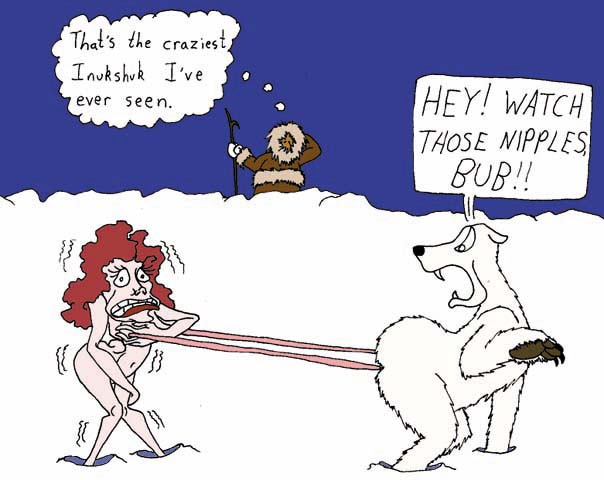
The above is a caricature of one Marlo Meekins. For those who don't know, she is a brilliant artist with a tremendous ability towards caricature. Anyone who hasn't seen any of her drawings on her own blog, do so now right here. You'll be glad you did.

Marlo has a tendancy, when it comes to caricarturing herself, to draw herself naked. She's never explained why she does this, nor do I ever think she will. Oh well, I figure it's a good idea to not break the pattern. Therefore, my caricature of her has her naked too. However, as you can see, the twist with my picture is that I placed her in an environment that no naked person would ever dare to venture into, the Arctic.

I hope everyone who visits this blog enjoys this picture of her but I know you'll enjoy her pictures more.

Thursday, July 13, 2006

A Robert McKimson activity

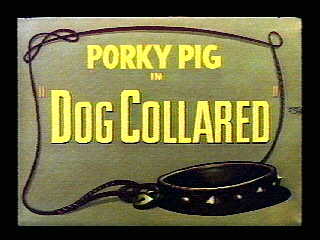
Here's a fun activity. I managed to find a copy of McKimson's cartoon Dog Collared online. I would like you to watch it and enjoy, but also think as you watch. Remember those binary opposites I talked about in the previous post that I said were in all of McKimson's toons? Well, I would live everyone to try and find those elements within this cartoon. Then, leave a comment telling me where they were. Who knows, some of you may find elements that I missed.

Happy watching.

Tuesday, July 11, 2006

Robert McKimson


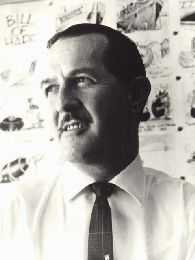
I would like to take some time and talk about Robert McKimson right now. First off, I'd like to definitely state that yes he was indeed a great animator. He didn't need that car accident to rattle his optic nerve and give him that tremendous ability but it certainly helped. However, this post will deal with Robert McKimson as a director. Yes, there are people out there who feel that Mr. McKimson was a less than ideal director. Leonard Maltin has been known to ramble on for long periods of time about his feelings of Bob's filmography. Inversely, there are others who feel that McKimson's work is woefully under-rated and that he should be revered along-side the other greats. I am one of those people. Actually, not only is his directorial work fantastic, I've noticed an auteur pattern as well. For those of you un familiar with the Auteur Theory, follow the link to a Wickipedia entry on the subject here. Read all that before you read this blogpost any further or else you will get lost and confused.

To everyone else: let's begin!

From viewings (and many repeated viewings) of McKimson's toons, I have discovered two binary opposites that are integrated into all of them (the ones I've seen anyway). They are:

nervy character / high authority
defiance / "cronie"-ism

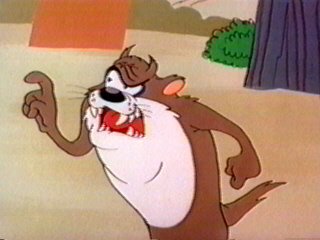
I'd love to know exactly how much those elements came from his own life and what he observed. Unfortunately, not enough is written about Robert McKimson. Hell, this blogpost alone probably raised the number of McKimson text by about 20% or so. From what I've read on him, the defiance element of his cartoons could have come from how meek he actually was in real life. Not only that, when his colleagues Chuck Jones and Friz Freleng got any flack from producer Eddie Selzer they defied him right to his face. McKimson, on the other hand would simply cave in to Eddie. This is ecatly what happened when Selzer told McKimson to get rid of the Tazmanian Devil. If it wasn't for Jack Warner himself demanding the character's revival, we wouldn't even have the Tazmanian Devil around today. If anyone out there who knows something about him as a person or even knew him personally, any input about him posted here in the comments section would be greatly appreciated. For now though, I'll point out just where I've seen those binary opposites in his cartoons.

Upon reading the first one, I'm sure many people would say, "but don't all the Bugs Bunny cartoons deal with defying authority no matter who was directing?" Maybe so, but I've noticed that McKimson seemed to take it up a notch or two. Many of the characters who defied authority in his cartoons would give an uneasy "ARE YOU NUTS??!!" feeling to the audience.
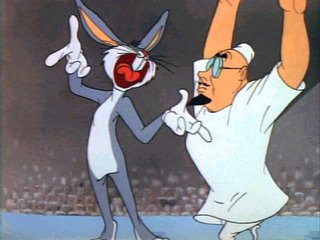
Take for instance Rebel Rabbit (c. 1949). Bugs is so mad at the Game Commissioner for making the rabbit bounty a measily 2 cents that he commits terrorist acts all over America. Not even Bob Clampett's Bugs would do that. Another good example is Gorilla My Dreams (c. 1948). After Bugs is adopted by a childless family of gorillas, papa gorilla (with a W.C. Fields child-hating complex) takes Bugs for a "walk". While alone in the jungle, the gorilla displays a brute strength capable of much destruction. However, Bugs is unimpressed by this and even taunts the beast further by hitiing him with a shovel. I remeber reading somewhere that McKimson's philosophy about Bugs' character is "He's the kind of guy who would walk up to a lion, hear that mighty roar, and then slap him." McKimson certainly put that philosophy to the test with his first Bugs cartoon Acrobatty Bunny (c. 1946). Bugs deals with a circus lion in that very fashion.
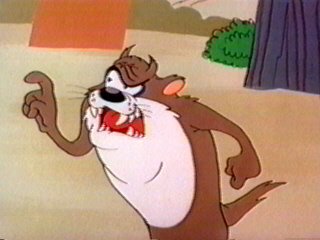
Of course, the most pure example of Bugs' anti-authoritarian stance is his Tazmanian Devil films. Notice how 3 cartoons Devil May Hare (c. 1954), Bedevilled Rabbit (c. 1957), and Dr. Devil and Mr. Hare (c. 1964) all start off with forest animals running for cover as the Tazmanian Devil approaches. This establishes him as King of the Forest for the most part. And even in Bill of Hare (c. 1962), even though Taz starts off in a crate on a boat, the Australian sea captain tells his shipmates to be careful unloading him onto the dock. The reverence in the captain's voice also gives the Tazmanian Devil this authority. All this makes the situation seem more deadly as he approaches Bugs. And yet, Bugs takes care of Taz as he had with the lion and the gorilla in the previous cartoons I mentioned. (Yes, the Tazmanian Devil also appeared with Daffy in Ducking the Devil (c. 1957) except there Daffy is made a coward and immediately starts running. Although, Daffy does confront the Devil when he finds out that music soothes his temper or when Taz-Boy tries to take his money).
But it wasn't just Bugs who defied authority in McKimson's toons. A delightful cartoon called The Unexpected Pest (c. 1956) deals with a poor mouse putting up with Sylvester's self-appointed authority (though he has to answer to a higher authority that being the owners of the house). Sylvester overhears the homeowners talking about getting rid of him since there are no more mice for him to catch. So, Sylvester makes a secret deal with a mouse he finds outside. As long as the mouse runs into the room and scares the wife everyonce in a while and then let's Sylvester beat on him, he won't get eaten. At first the mouse is a slave to this arrangement because he doesn't want to die. But, later on the mouse does some thinking of his own. In his own words, "it seems that you need me to keep your happy home which now makes me boss around here." From this point on, it is Sylvester at the mercy of both the mouse and the homeowners. In The Honey-Mousers (c. 1956), after Ralph and Ed have had no end of trouble trying to evade a cat in the kitchen, Alice simply walks right up to that feline, pulls off a whisker and yells, "BEAT IT!!" Surprisingly, the cat retreats. Also, check out two of Speedy's drunk friends Pablo and Fernando in Tobasco Road (c. 1957). While walking home drunk through a dark alley they come across a huge cat. Instead of running away like they should, they actually pick a drunken fight with him. Without Speedy's help though, they surely would have been eaten.
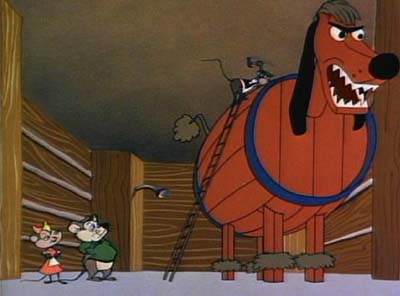
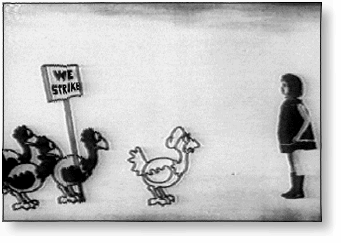
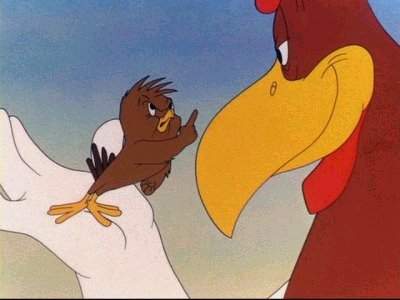
And, of course, this element is all too clear in the Foghorn Leghorn series, ESPECIALLY the ones where Henery Hawk is present. Initially, it's clever rearrangement of the predator/prey set-up found in many WB toons.
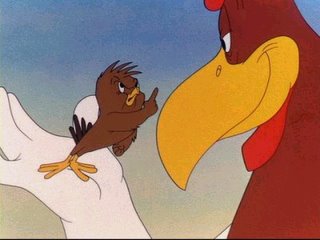
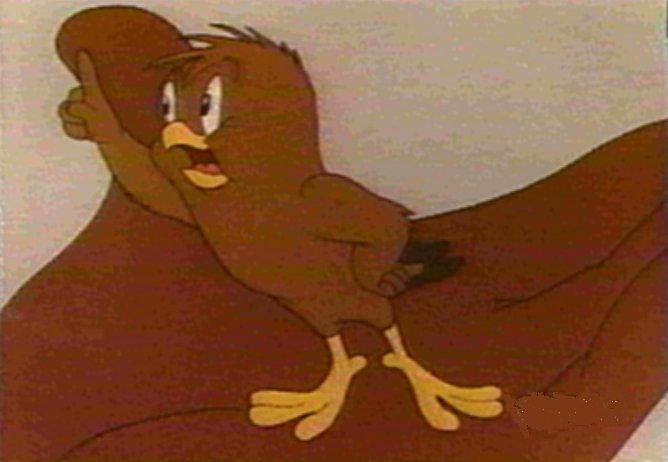
Technically Henery is the predator and Foghorn Leghorn is the prey. But, since Foghorn is so boisterous and Henery is so naive, that relationship becomes moot. Essentially, the whole thing turns into a young infant with "more nerve than a bum tooth" at the mercy of an out-spoken rooster who rules the barnyard (at the expense of that guard dog even). This sort of relationship is there no matter who else approaches Foghorn's authority whether is Egghead Jr. (first seen in Little Boy Boo (c. 1954)), Miss Prissy (first encountering Foggy in Lovelorn Leghorn (c. 1951)), that lint-pickin' weasel (first seen in Plop Goes the Weasel (c. 1953)) or any other one shot characters like the fox (in Fox Terror (c. 1957)), Banty the beatnik (in Banty Raids (c. 1963)) or Kid Banty (in Sock a Doodle Doo (c. 1952)). And, of course, this element is present in Mcimson's creation Speedy Gonzales. His first cartoon Cat-Tails For Two (c. 1953) has Speedy laughing as he deals with two cats that are caricatures of Stienbeck's Of Mice and Men characters.
Interestingly, in many of McKimson's toons, the authority figure to be defied is the father. This is most obvious in the cartoons where he gave Sylvester a son, namely Sylvester Jr. But there are some other toons that deal with this as well such as Sleepy Time Possum (c. 1951), Gorilla My Dreams (c. 1948), and Strife With Father (c. 1950). And then there's Henery Hawk's relationship with his father. In Walky Talky Hawky (c. 1946) the toon starts off by portraying Henery's father as a mellodramatic goof who reads Looney Tunes comics (while Henery reads the more risque Esquire magazine). In The Foghorn Leghorn (c. 1948), Henery actually has an arguement with his father about hunting chickens. When his father puts his foot down saying "You're NOT going and that's a that.", Henery defies his father and goes along anyway. There was even a father/son relationship between Foghorn Leghorn and Henery in Strangles Eggs (c. 1961), which Foggy had previously gone through with Egghead Jr. Compare that with the ralationship between Henery and his dad in You Were Never Duckier (c. 1948). In that, Chuck Jones gives the two a very loving and fuctional relationship. (By the way, Chuck Jones as well as some other Looney Tunes directors are also auteurs. But that's a subject for a whoooooole other post.)
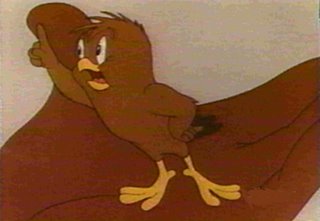
From this evidence, I'm guessing that Bob McKimson may have had an estranged relationship with his own father. Unfortunately, I only have the evidence of the toons to support that. Anyone who can shed some light on this apsect of his life, please comment here.
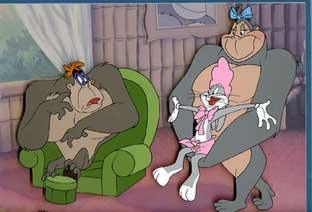
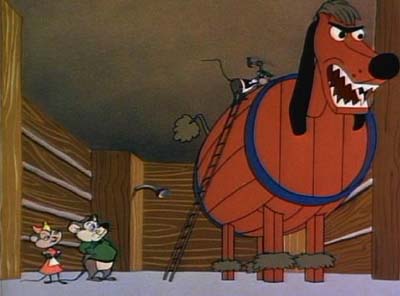
Okay, I've typed quite a bit about the defiance of authority aspect of McKimson's toons. Now, I'd like to talk about the other element: "cronie"-ism. Basically, along with those characters defying authority, there are other characters that are either hapless victims or willing slaves to the authority. In one example Hurdy Gurdy Hare (c. 1950) Bugs disciplines a monkey for trying to embezzle his hurdy gurdy money. Right away, the little monkey runs off to a nearby zoo and tells a big gorilla about the nasty thing that rabbit did to him. The gorilla thusly breaks through the bars and goes after Bugs as the little guy cheers him on. In the Tazmanian Devil series, the animals that run and/or hide from him are the cronies, in that they show him respect by getting out of his way. In Good Noose (c. 1962), the captain of the ship has a little cronie parrot who helps the captain give Daffy a rough time. In Hippety Hopper (c. 1949), a little mouse becomes great friends with Hippety after he saves his life. They both go on to defeat Sylvester and a bulldog. In Bell Hoppy (c. 1954), Sylvester will do ANYTHING to get into the Loyal Order of Alley Cats Mouse and Chowder Club no matter how many times they blackball him. In McKimson's Speedy Gonzales cartoons, the mice act as absolute cronies to him. In Tobasco Road (c, 1957), they throw a party in his honour.
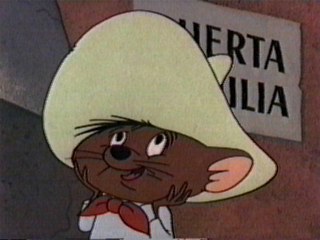
In Tortilla Flaps (c. 1958) they OOH and AAH as he plays ping-pong with himself. In Message to Gracias (c. 1964) however there is another authority figure with many cronies around him. There is a mouse leader named El Supremo with girls all around him and all his servants address him while on their knees.
But, of course, the most blatant and gushing cronie of them all is Sylvester Jr.
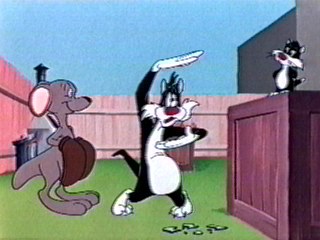
No matter how badly Sylvester gets thrashed around by Hippety Hopper, a dwarf eagle (Cat's Paw c. 1959) or a loud southern lady (Claws in the Lease c. 1963) Junior is always cheering for his pop. That's the main reason Junior must put a bag over his head every once in a while. His love and respect for his father is so great that seeing him thwarted is very traumatizing to him.

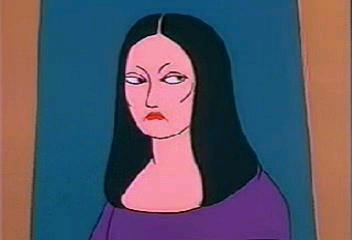
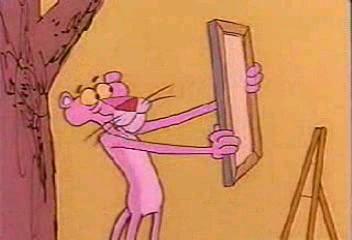
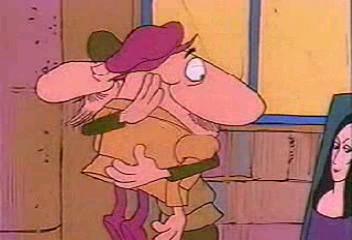
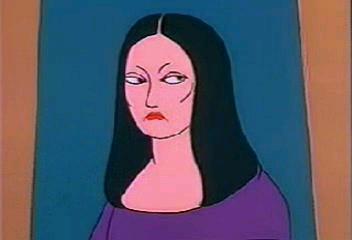
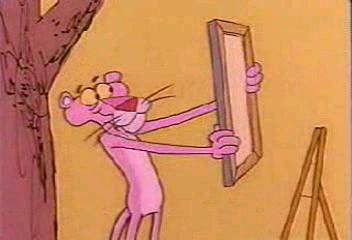
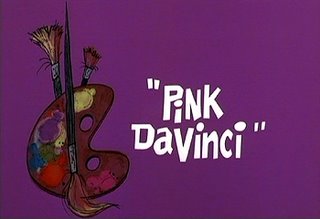
Of course, in order for Robert McKimson to be a full fledged auteur, one has to look at his entire filmography, including the cartoons he directed at the DePatie-Freleng studio. One such example is Pink Da Vinci (c. 1975). Here we have the oh so great Leonardo Da Vinci painting the Mona Lisa but with an ugly frown on her face. Leo is quite satisfied with that. However, the Pink Panther knows better. So, when Da Vinci isn't looking, Pink rubs off that ugly frown and replaces it with the famous smirk we know today. Leo's friend only manages to see this painting when Pink's smile is on it. He calls it a masterpiece and gives Leo a big hug. However, when Leo sees that it is not his frown on there, he throws a tantrum and instructs his friend to leave. When both Da Vinci and Pink go back and forth changing the mouth, things escalate until Leo lands himself in jail. It's then the Pink Panther who submits the finished Mona Lisa to the Louvre museum and gets the fame.
Well, that's quite a bit of examples for now. Any more and I think blogspot would burst. But, feel free to add any more observations of McKimson's binary opposites in the comments section along with any other info on McKimson like I asked before.